Advanced Stem Cell Research. Contact us hello@RetroXell.com

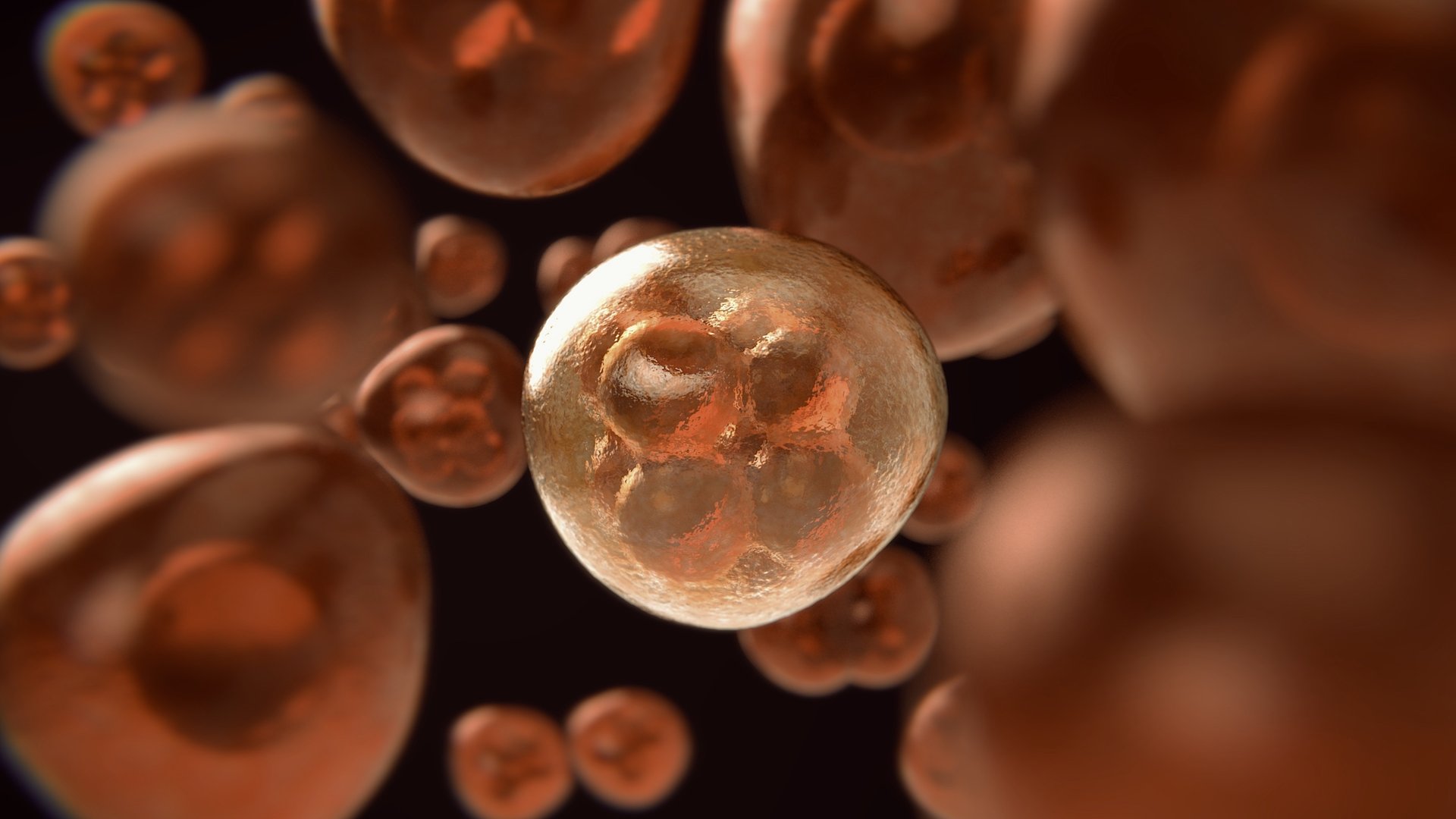
The Spectrum of Specialized Repair: Pluripotent vs. Multipotent Cellular Dynamics
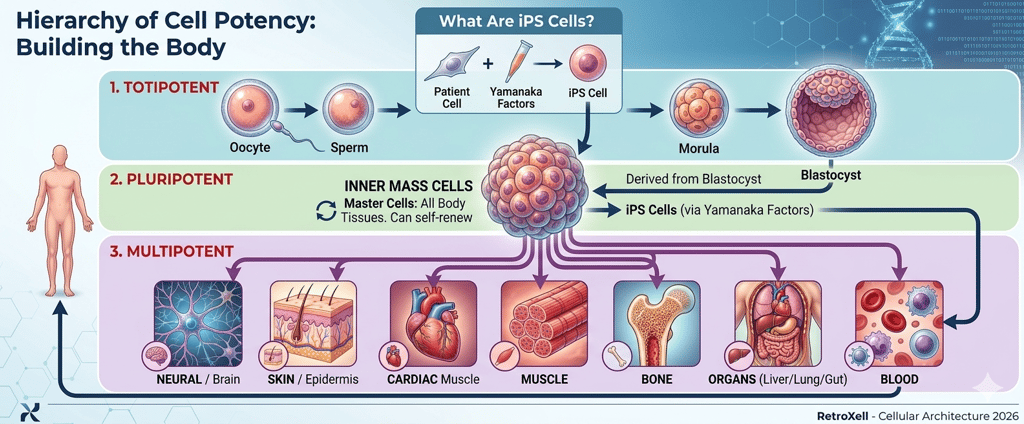
Understanding this hierarchy—specifically the critical distinction between Pluripotent and Multipotent cellular dynamics—is fundamental to advanced regenerative science.
10/13/2025
Differentiation Capacity: The Universal Architecture vs. The Targeted Specialist
The fundamental metric of a cellular system’s therapeutic value is its differentiation capacity—its biological competence to transform into functional, highly specialized adult cell types. Through our high-end biotechnology platform, RetroXellstandardizes the distinct advantages of both Pluripotent and Multipotent systems, providing global healthcare networks with a highly versatile, dual-engine regenerative matrix.
Pluripotent Master Systems (The Universal Architects): Pluripotency represents the absolute pinnacle of cellular plasticity. It is the unique biological property that allows a single cell type to differentiate into any of the 220+ distinct cell types that constitute the entire human physiological architecture. Whether the clinical protocol requires interfacing with complex neural substrates, specialized cardiomyocytes, or hepatic lineages, Pluripotent cells possess the completely unrestricted genetic blueprint required to rebuild any tissue architecture.
Multipotent Specialized Matrices (The Targeted Specialists): Multipotent lineages operate as highly efficient, site-specific specialists. Their differentiation potential, or plasticity, is naturally bound to a restricted family of cells. For example, a multipotent mesenchymal stem cell (MSC) can seamlessly differentiate into structural bone, cartilage, or adipose tissue, making it an exceptional asset for localized structural restoration, while naturally remaining insulated from neural or multi-organ transformations.
The Biological Hierarchy: The Precision Pathway of Specialization
The dynamic interplay between these two distinct cellular systems defines the natural blueprint of human development and tissue repair. This pathway operates as a meticulously regulated, linear biological sequence:
The Pluripotent Origin: At the foundational baseline of biology, these unrestricted cells create the absolute structural and metabolic framework of the organism.
The Multipotent Transition: As the biological architecture matures, pluripotent cells systematically differentiate into multipotent progenitor cells, which are targetedly restricted to specific germ layers (ectoderm, mesoderm, or endoderm).
Terminal Differentiation: Ultimately, these multipotent progenitors divide into highly functional, specialized adult cells that execute daily physiological and homeostatic tasks.
Understanding Stem Cell Fates: The Molecular Decision-Making Framework
To manipulate these dynamics for clinical optimization, our platform monitors stem cell fate—the precise molecular decision-making process by which a cell responds to systemic signaling and chooses its functional trajectory. When introduced via physician-guided frameworks, a cell will adopt one of four definitive outcomes:
Quiescence (Stasis): The cell remains in a state of metabolically quiet dormancy, preserving the localized stem cell pool until it receives a precise activating signal (such as an inflammatory prompt or tissue injury).
Symmetric Self-Renewal (Expansion): The cell divides into two identical, non-senescent stem cells, exponentially increasing the total volume of regenerative potential available within the target tissue.
Asymmetric Self-Renewal (Balanced Repair): The cell divides into one exact replica of itself and one specialized progenitor. This ensures immediate tissue repair takes place while simultaneously keeping a pristine stem cell in reserve for future homeostatic demands.
Symmetric Differentiation (Acute Deployment): The cell divides into two fully specialized cells. This pathway provides rapid, massive, and immediate tissue growth, serving as an intensive structural first responder.
Regenerative Potential and Standardized Clinical Application
At RETROXELL, we view this hierarchy as a highly sophisticated suite of performance-optimized medical tools. The selection of a cellular protocol is customized to match the precise clinical indications of the patient:
Targeted Musculoskeletal Maintenance (The Multipotent Strategy)
Multipotent systems (MSCs) are uniquely engineered for site-specific, structural interventions. Their localized affinity and high-potency anti-inflammatory kinetics make them exceptionally effective for targeted orthotic and joint restoration—such as replenishing degraded articular cartilage, repairing tendon lesions, or stabilizing local bone density.
Comprehensive Systemic Rejuvenation (The Pluripotent Strategy)
For complex, multi-systemic decline, neurodegenerative conditions, or advanced biological aging, a localized approach is insufficient. Pluripotent systems (PSCs) provide a universal molecular blueprint for whole-body rejuvenation, delivering an unrivaled capacity to modulate systemic inflammation, optimize mitochondrial bioenergetics, and restore cellular resiliency across entire organ networks simultaneously.
Engineering the Future of Clinical Longevity
The core focus of the RETROXELL platform is the precise, quality-standardized manipulation of these cellular kinetics. By vetting and translating advanced partner-laboratory protocols that direct stem cell fate, we enable physicians to safely expand cell populations in vitro before directing them into hyper-targeted, region-specific repair pathways via our advanced Stem X delivery vehicle.
We do not merely observe biology; we translate it into a highly predictable, standardized clinical asset—supplying the exact molecular resources required to systematically renew the human body from the inside out by deploying the dual power of both MSC and PSC technologies.
Where Advanced Biotechnology Meets Premium Clinical Execution
At RETROXELL, we provide a sophisticated ecosystem built entirely on scientific transparency, strict cGMP compliance, and clinical excellence. Our platform seamlessly blends elite laboratory research with a high-end, supportive medical network. By ensuring that every partner laboratory operates under the highest international isolation and purification standards, we guarantee that our medical solutions are as safe as they are biologically transformative.